Before the Album Sequence: Music Released One Side at a Time
Music released one side at a time shows how record formats shaped sequence, giving listeners and musicians a useful way to hear an album’s pacing.
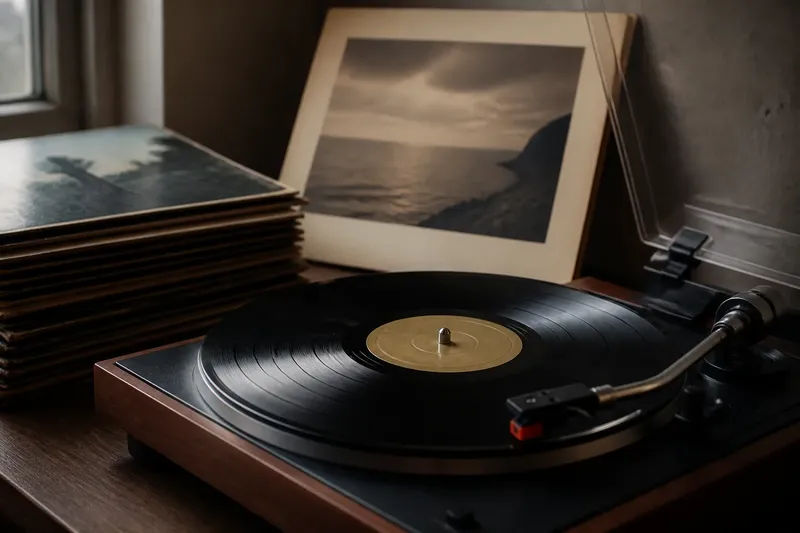
The common mistake is to treat a record’s side break as a place where the music simply stops. That can flatten the sequence: the final track on one side, the act of turning the disc and the opening track on the other can form a deliberate part of listening. Music released one side at a time makes that relationship easier to hear.
Before an album could be treated as a single uninterrupted stream, its physical carrier imposed boundaries. Those boundaries did not dictate what musicians had to compose, but they gave listeners a recurring pause and asked artists, producers and record companies to decide what should happen on either side of it.
What does “one side at a time” mean?
It describes the way a listener plays a record: one playable face is heard, then the disc is turned to hear the other. A side is not a musical unit in itself, but the record makes it a practical unit of attention. The end of a side may coincide with a song ending, while the beginning of the next begins a fresh run of tracks.
The distinction matters because an album sequence is more than a list of songs. Sequence is the chosen order and pacing of tracks, including the transitions between them. A record’s two faces make one particular transition—the change from one side to the other—unavoidable in ordinary playback.
Earlier recorded music also used side divisions, though formats and playing practices varied. As the long-playing record became an important format for albums, artists and labels could present extended collections of music across two sides. The medium offered continuity within a side and a built-in interruption between them.
Why did records have two sides?
A disc has two faces that can carry recorded grooves, so playing both sides made practical use of the object. The listener could turn it over rather than replace it with another disc to continue the programme. The available playing time on each side depended on the record and how it was made; there was no single duration that applied to every release.
Grooves record sound in a physical spiral, and the amount of music that can be fitted depends on technical and artistic choices. Those choices affect how long a side can run and the sound the record is intended to reproduce. A longer programme may call for compromises, while a shorter side leaves more room for other priorities. This is one reason a side break was not merely a graphic divider on a sleeve.
For a listener, the turn was a small physical task with a large perceptual effect. The music stopped, attention shifted to handling the disc, and a new opening arrived. It is rather like turning a page: the story continues, but the pause gives the next passage a separate entrance.
How did side order shape an album?
Side order gave an album two kinds of beginning. The first track opened the whole record; the first track on the second side had to welcome a listener back after an interruption. That second opening could restore momentum, change the mood or make a new section feel as if it had begun.
Closers had a related job. A side-ending song might feel complete on its own, or it might leave a question, a held note or an unsettled mood for the listener to carry through the turn. The next side could answer that feeling, contrast with it or simply begin somewhere new. None of these choices was compulsory; the useful point is that the format made the boundary audible in practice.
Track order also had to account for the character of each side as a whole. A sequence might build towards a forceful ending, place a quieter song after several energetic ones, or distribute contrasting material so that one side did not feel like an afterthought. The decision was not just which song followed which. It was also how each run of tracks started, developed and concluded.
That does not mean every album was designed as a pair of perfectly balanced halves. Some records simply gathered songs in a convenient order, and a side could contain a loose collection rather than a planned arc. The format supplied an opportunity for structure, not proof that structure was always intended.
Was every album designed around its sides?
No. An album could be shaped by the songs, the recording sessions, a label’s decisions or the practical constraints of its release, without a strong concept for each face. A side break might follow a natural pause in the music, or it might arrive because the sequence needed to fit the available playing time.
It is also easy to overread a boundary after the fact. A dramatic ending followed by a striking new opening may be meaningful, but the record alone cannot establish what the musicians intended. Listen for what the arrangement actually does: whether the mood carries over, whether the next track resets the scene, and whether the pause changes how the transition feels.
The turn could also separate material for reasons beyond musical storytelling. A release might divide songs according to length or production needs, or place contrasting material on opposite sides. These possibilities can coexist. The most useful listening question is not whether the division was definitely planned, but what the division does to your experience of the sequence.
What should you listen for?
Start with the last moments of the first side. Does the track end firmly, fade away or leave an unresolved sound? Then notice the opening of the second side: does it answer that ending, deliberately break from it or establish a different atmosphere?
Pay attention to the change in energy across the boundary, too. A quiet opener after a loud closer can feel like a deliberate reset, while two similarly paced tracks may make the record’s sides feel joined. Listen for shared instruments, lyrical images, rhythmic patterns or production textures, but avoid assuming that a resemblance must be a hidden message.
You can make a simple two-column note while listening. Put each side’s track order in its own column, then mark where the energy rises, falls or changes character. The aim is not to score the album; it is to see whether the side break separates two different movements or sits inside a continuous flow.
Say you are listening to an invented album whose first side ends with a restrained piano song and whose second begins with a brisk brass arrangement. The sharp contrast would make the turn feel like a reset rather than a continuation; if the second opener instead began with the same piano figure, you could listen for a more direct link. In either case, the audible difference is the starting point, not a claim about the artist’s intentions.
Why does the side break still matter?
Many listeners now encounter albums through formats that do not require a physical turn. That removes a task, but it does not make the old division meaningless. A pause can still separate one sequence from another, and an album can still benefit from considering what should greet a listener after a natural break in attention.
Thinking in sides can help anyone discussing or arranging an album, even when the eventual release will be digital. It asks a practical question: if a listener pauses here, what should the return feel like? A strong restart may be more useful than making every transition smooth, especially if the album’s character depends on contrast.
The idea is also useful when listening to a record that has been reissued in a different format. A continuous digital version may preserve the track order but soften the sense of two distinct runs. You can recreate the older listening shape simply by pausing after the last track of the first side and returning at the next opener.
Do the original sides affect digital editions?
They can, though a digital edition may keep the track order without signalling the original division. Some releases retain side labels in their notes or artwork; others present only a continuous list. Where the information is available, the original break can reveal how the album was grouped for its first physical presentation.
Do not assume that a modern sequence has preserved every detail of an earlier issue. Reissues can alter track order, add material or present a different version of the programme. If side placement matters to your reading of an album, check the edition’s track listing and packaging rather than inferring the old layout from a digital queue alone.
What questions do listeners ask?
Why do some albums start the second side with a strong song?
The first track after a side break has to re-establish attention, so a clear entrance can help the listener settle back into the album. It might do so through a memorable melody, a distinct rhythm or a sudden change of atmosphere; the effect depends on the sequence around it.
Does a side break count as part of the music?
The handling of the record is not recorded music, but it changes the conditions in which the next track is heard. A pause can make a contrast more noticeable or give a new section a fresh start, so it belongs to the listening experience even when it is not part of the sound itself.
How can I find the original side divisions?
Look at the original record labels, sleeve notes or a track listing that marks Side One and Side Two. If those details are absent from the version you have, a reliable edition listing may clarify the order; do not assume that every later release uses the same sequence.
Should I pause a digital album between its sides?
Try it if you want to hear the pacing that a physical record encouraged, especially when the original side break is documented. Then listen again without pausing and compare how the second-side opener feels; either version can be revealing without being the only correct way to hear the album.
What can side order teach us?
Music released one side at a time reminds us that sequence is shaped by the conditions of listening as well as by the songs themselves. A physical boundary can create anticipation, reset attention or divide a long programme into more manageable stretches. Those effects remain available to listeners even when the disc is no longer in their hands.
When you next hear an album with two clearly marked sides, notice the last track before the turn and the first one after it. That small comparison can show whether the sequence treats the break as a door, a pause or simply a practical seam—and it gives you a more precise way to hear how the album holds together.